Local membrane repair
A compatible patch can close a puncture or failed detail when the surrounding material is sound. Preparation and the correct joining method are essential to that connection.
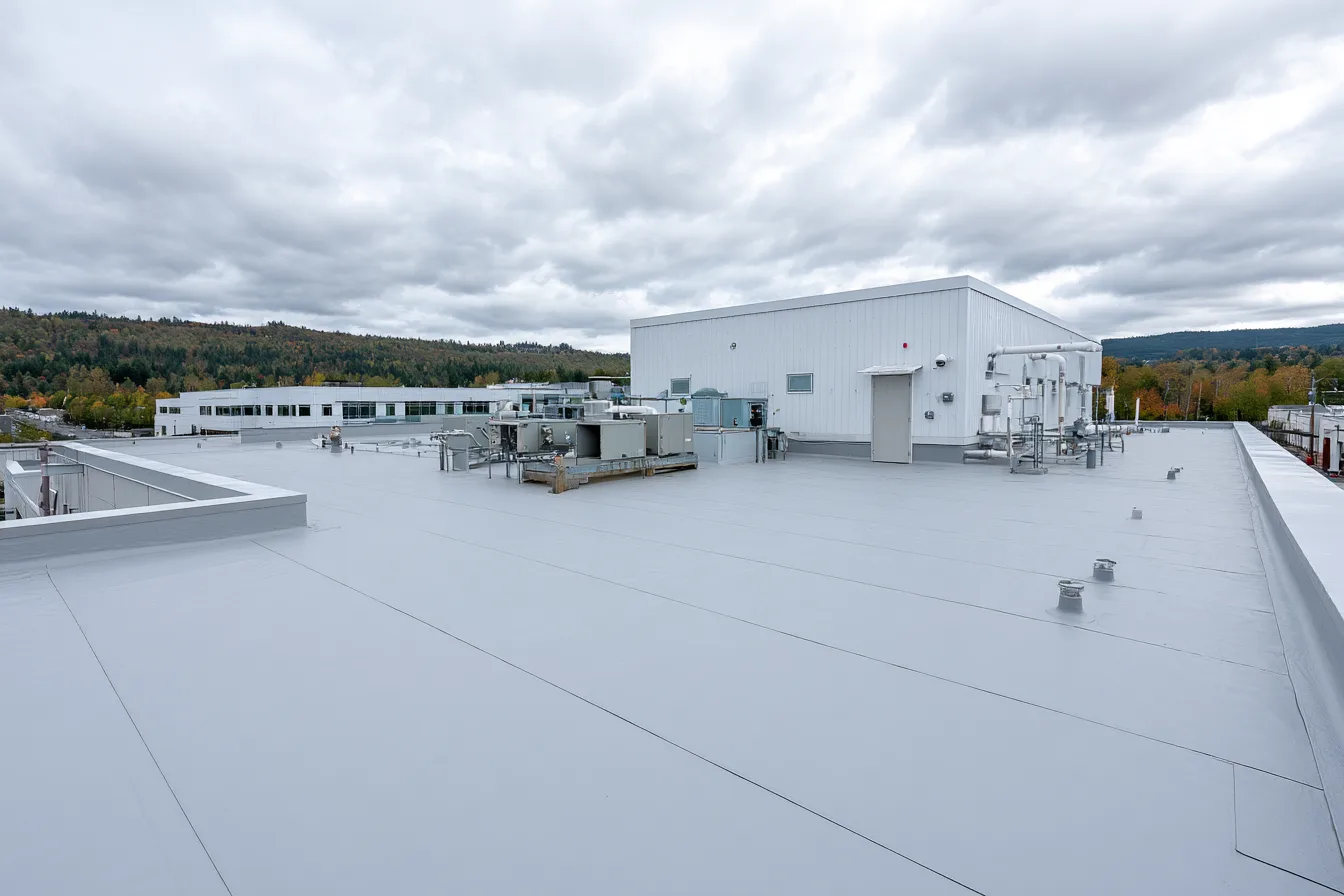
Low-slope roof leaks can travel through layers before they show up indoors. Repair starts with the entry point, drainage and the condition beneath the surface.
A wet ceiling tile may sit well away from the opening in the membrane. Water can move beneath the covering or through insulation before reaching the deck and interior. The repair scope has to follow that path rather than repeatedly patch the roof directly above the room.
The roof system matters too. TPO, EPDM and asphaltic membranes use different compatible repair materials and joining methods. Establishing the existing assembly is part of the job.
A continuous membrane still has edges, changes in height and planned openings.
A blocked drain and a low area in the roof are different problems. Removing debris can restore flow to a working drain. A low spot caused by the assembly or structure needs a different assessment. Adding another surface layer does not automatically change the slope.
The repair needs to preserve the connection between membrane and drain. If water reaches a gap around the drain instead of entering the drain, the opening remains even after the surface is clean.
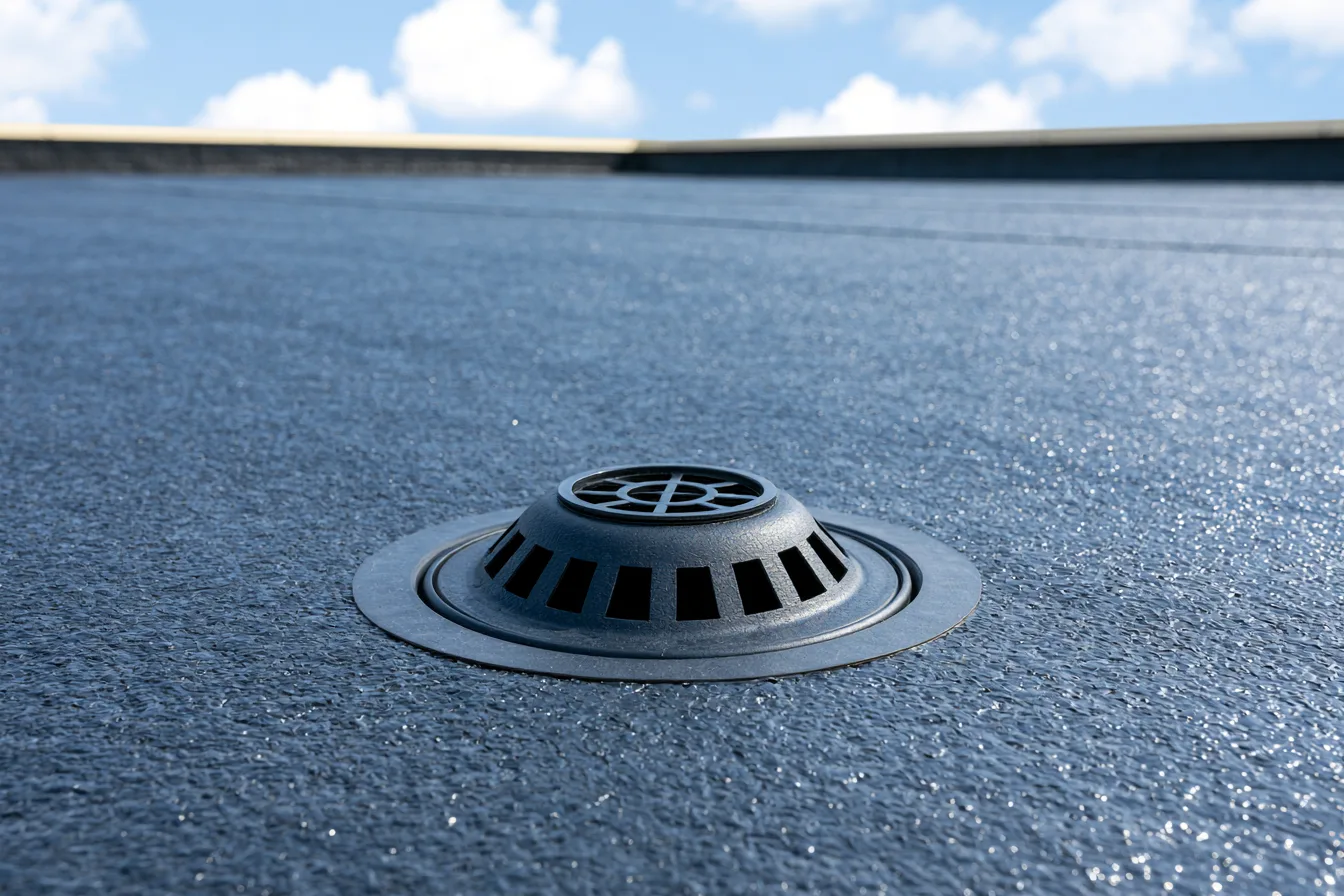
The visible opening helps locate the work. The underlying condition determines how much must be opened.
A compatible patch can close a puncture or failed detail when the surrounding material is sound. Preparation and the correct joining method are essential to that connection.
Saturated insulation or damaged decking can require a larger opening than the surface defect suggests. Replacing only the top layer leaves the consequences of the leak inside.
Recurring leaks, widespread deterioration or difficult drainage can justify a replacement or restoration assessment. That decision follows the condition, not the number of ceiling tiles already replaced.
Yes. A mechanical problem or condensation can also wet the space below, while damaged curb flashing is a roofing issue. The source has to be distinguished so the correct trade and scope address it.
The work plan depends on the area, method and operations below. Access, odors, noise and any mechanical coordination need to be part of the project discussion. No uninterrupted-operation guarantee applies to every job.
Replacement becomes a stronger option when the assembly cannot support durable repair or restoration. The commercial roofing overview compares the conditions behind those choices.
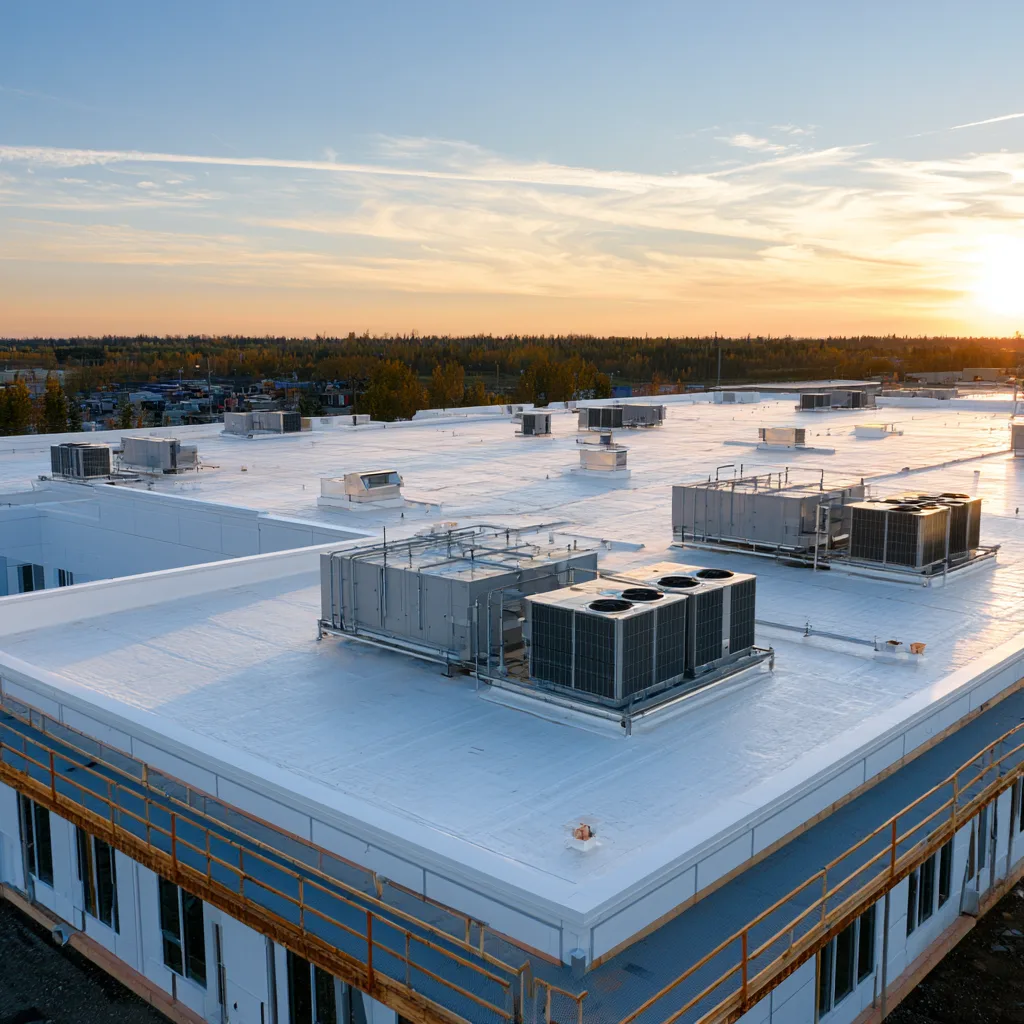
Name the room or operation affected, the roof system if known and any access limits. Start with an inspection of the roof and its water path.