Insulation and wet areas
Wet or deteriorated materials need identification and appropriate removal. Keeping wet layers under a new membrane leaves the original problem inside the roof.
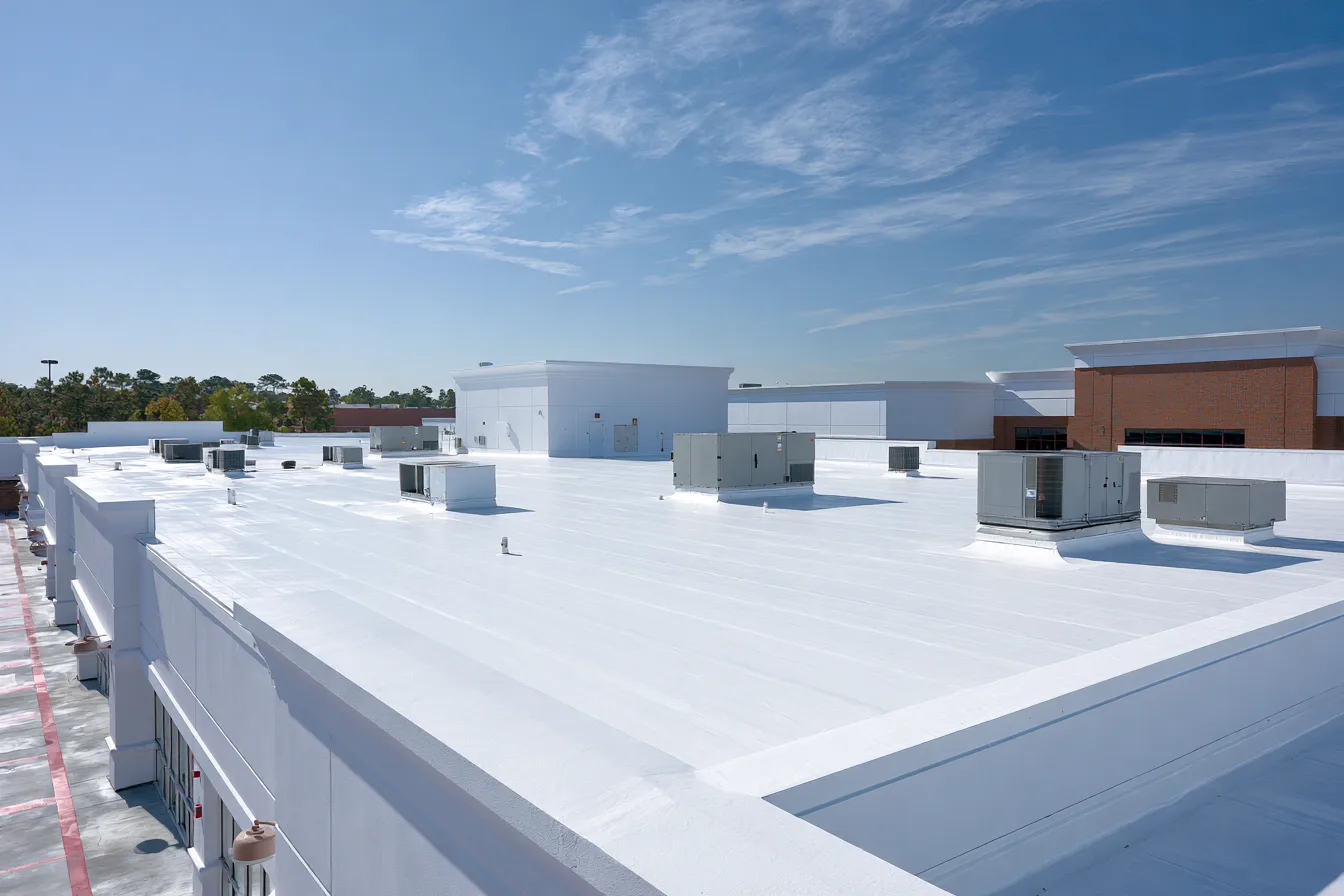
TPO can provide a continuous low-slope roof covering when its seams, attachment and penetrations are properly detailed. Plan repairs or replacement around the whole assembly.
TPO is a thermoplastic single-ply roof membrane. Adjacent sheets are joined with hot-air welded seams, and flashing connects the surface to walls, pipes and equipment curbs. An opening at one detail interrupts the continuity the system depends on.
A leaking TPO roof needs more than a general coating over the wet spot. The assessment looks at the seam or puncture, whether the surrounding material is suitable for a compatible repair and what happened to the layers below it.
The overlap is where the sheets meet, but the weld is what joins them. Dirt, poor preparation or an incomplete weld can leave an opening even when the seam appears closed from a distance. A roofer evaluates the actual connection and uses the repair method appropriate to the existing membrane.
Equipment curbs need their own corners, terminations and transitions. Those details see changes of direction and height, so the membrane has to remain continuous around them rather than merely cover the flat field.
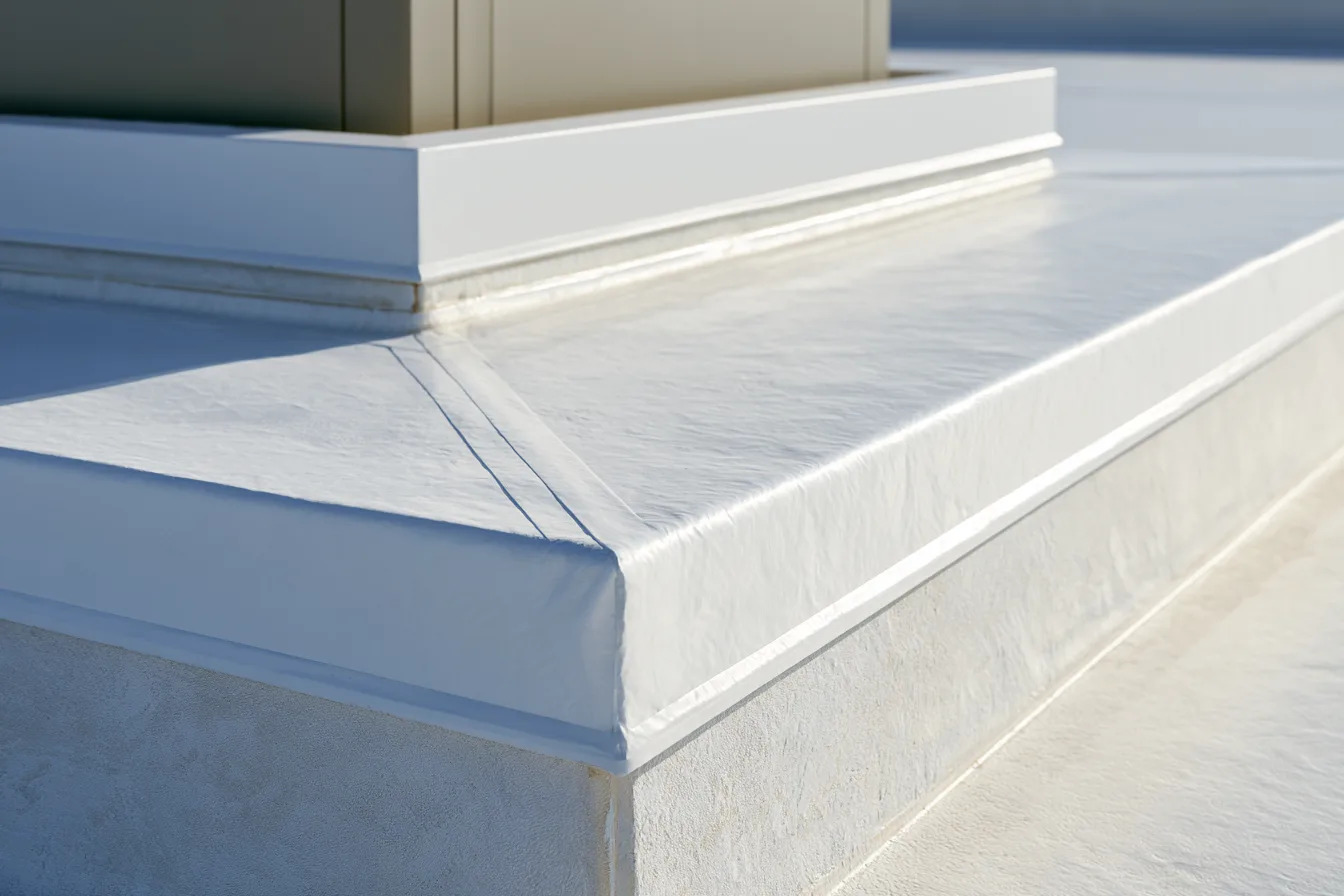
A replacement scope should identify the supporting assembly, not just a roll thickness.
Wet or deteriorated materials need identification and appropriate removal. Keeping wet layers under a new membrane leaves the original problem inside the roof.
Fastened, adhered and other approved systems depend on the deck, substrate and project requirements. Attachment patterns and adhesives are system choices, not interchangeable shortcuts.
Tapered insulation, drain details, scuppers and curb heights have to work with the finished assembly. A new membrane follows the shape it is installed over unless the scope changes that shape.
Yes, where the membrane around the defect can accept the compatible repair and the underlying damage is addressed. A puncture in otherwise sound roofing is a different project from widespread seam failure or wet insulation.
Reflective surfaces can reduce solar heat absorption, but energy use depends on insulation, climate, equipment and the whole building. No specific utility savings can be promised from membrane color alone.
Manufacturer system coverage and contractor workmanship coverage have their own terms, eligibility and exclusions. The proposal should identify the actual coverage offered for the selected assembly; there is no universal TPO warranty term.
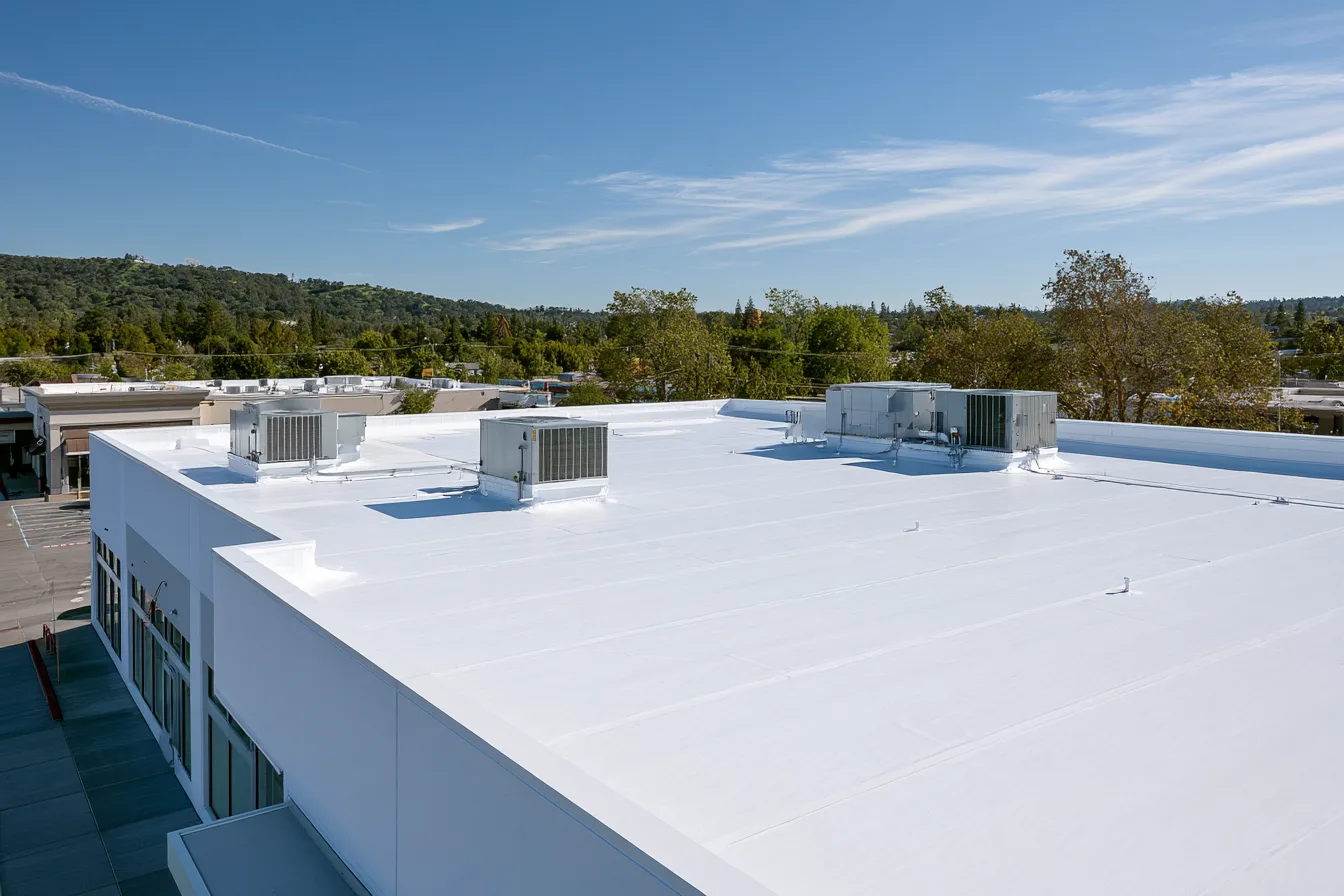
Tell us the roof system if known, where the leak appears and how the building is used. The next step is an inspection of the actual assembly.