Limit further entry
Temporary protection addresses an opening until suitable permanent work can happen. The method depends on the damage, roof access and weather; it is not the finished repair.
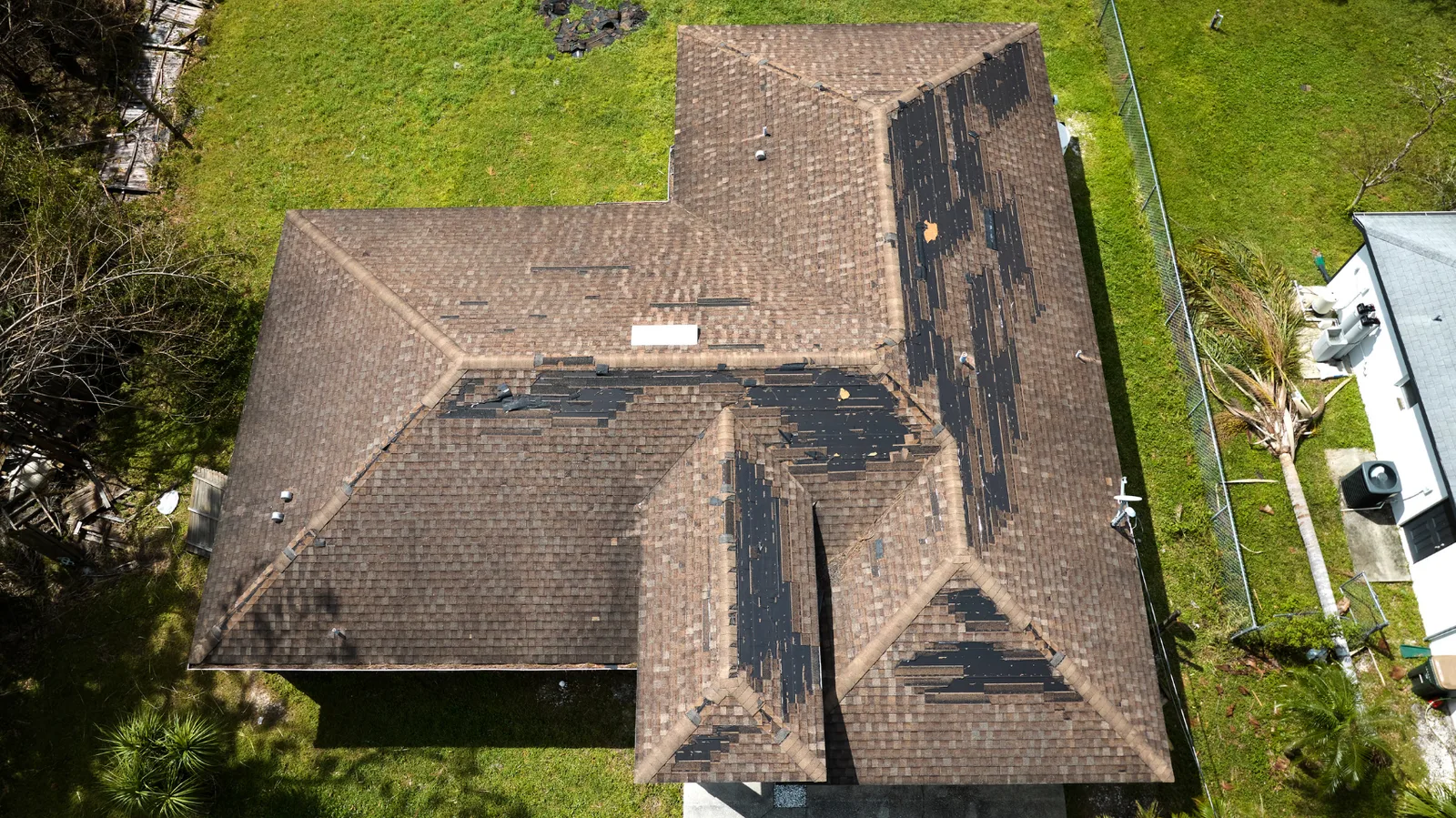
Missing shingles or a new leak after wind or hail need a closer look. Start with the immediate opening, then establish the permanent roof work.
Keep people away from a sagging ceiling, wet electrical equipment and damaged branches or wires. Move belongings out of the affected room if it is safe, and stay off the roof. A damaged roof can have loose material or an unstable surface that is not obvious from below.
Tell us what changed and whether water is entering now. The first roofing question is whether temporary protection is needed; the next is what the roof can support as a permanent repair.
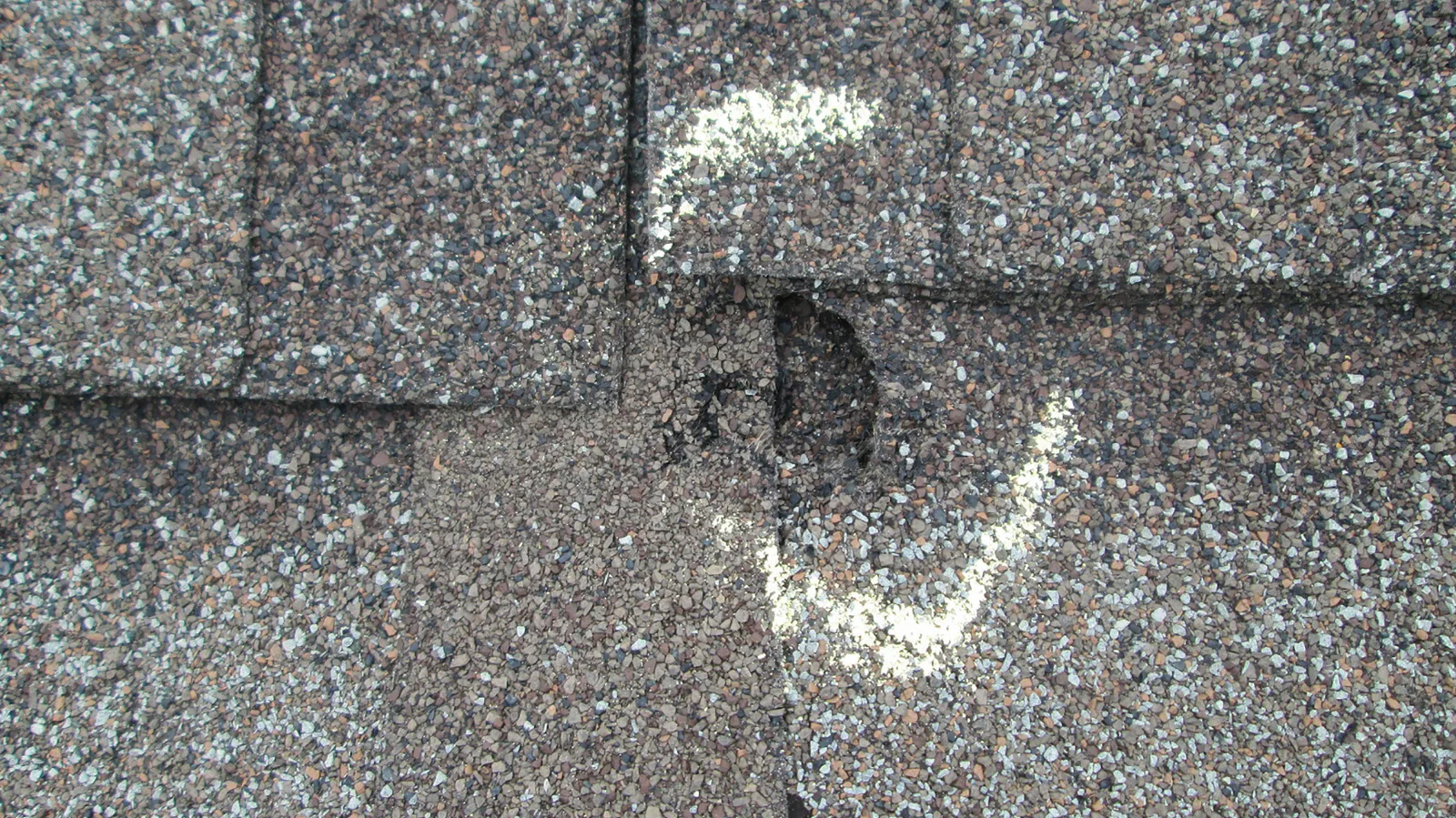
Wind can break the seal between shingle courses, crease a tab or remove roofing altogether. Hail can damage the shingle surface and the material beneath it. Those are different failure mechanisms and need different assessment.
Marks elsewhere on the property can provide context, but they do not prove the condition of the roof. A walked inspection looks at the roof itself. Nor can an inspection reliably attribute every damaged area to one storm date.
An emergency covering and a finished repair do different jobs.
Temporary protection addresses an opening until suitable permanent work can happen. The method depends on the damage, roof access and weather; it is not the finished repair.
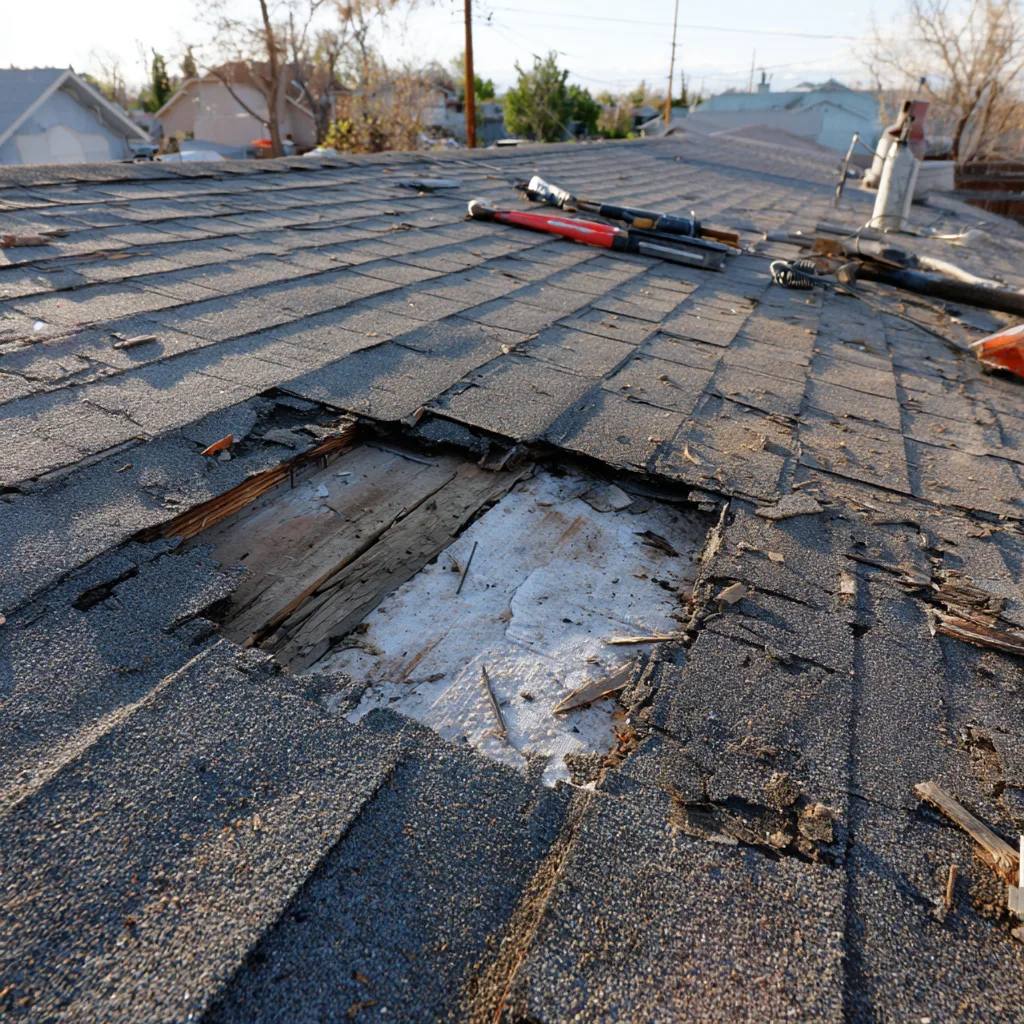
Missing material is visible. Damage around it, underlayment condition and the base beneath it determine how far the permanent work needs to extend.
Localized damage can be repaired into sound roofing. Widespread failure, brittle material or a damaged deck can move the project toward a larger section or replacement.
Visible leaking is not the only reason for an inspection. If you are concerned about hail, the roof can be checked for actual damage before water reaches a room. Nearby hail does not establish that your roof was damaged.
Age and ordinary wear are different from covered storm damage. The policy decides coverage and how depreciation or a deductible affects payment. The insurance guide explains those terms.
A missing area, the room where water appeared or the approximate storm date gives the inspection a useful starting point.